Or did it just kill the ability to guess?
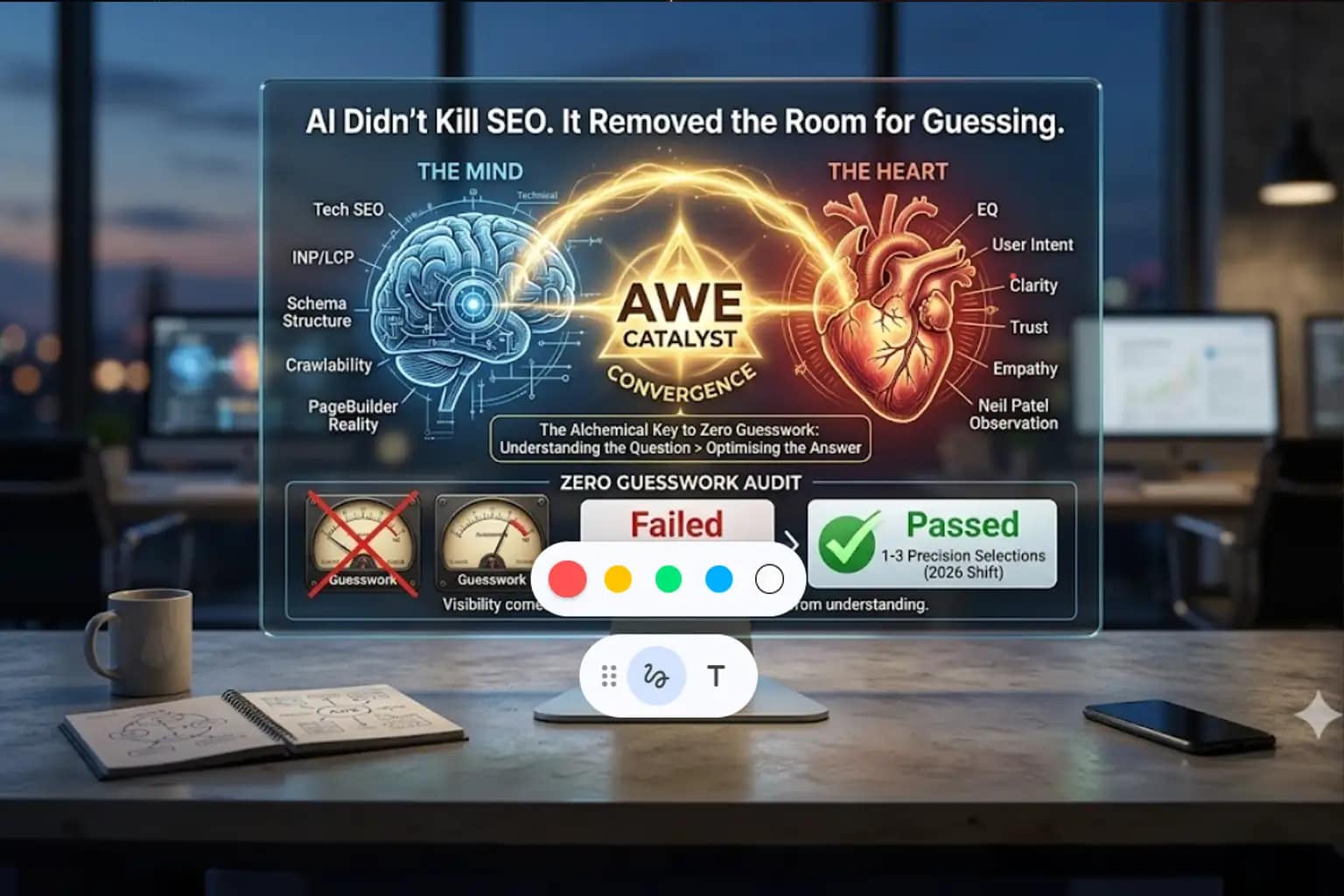
AI didn’t kill SEO.
It exposed weak SEO.
AI and recent Google changes haven’t made SEO seemingly irrelevant.
They’ve made clarity mandatory.
We’re moving beyond simple keyword matching into a model where:
– intent matters more than keywords
– structure matters more than volume
– understanding your user matters more than optimisation tricks
The real question is no longer:
“Does this page contain the right keywords?”
But:
“Does this page clearly answer what the user is trying to solve?”
For years, SEO focused on:
– keyword targeting
– ranking improvements
– traffic growth
And until recently, that could still work.
But search has changed.
As many practitioners (including Neil Patel) have pointed out, recent updates caused some sites to rise, and others to drop.
Not randomly.
But based on how well they align with real user intent.
Today, you don’t get 10 chances on page one.
You often get 1–3.
Or none.
Search engines are no longer listing options.
They are selecting answers.
To be selected, your page must:
– understand the user’s situation
– match their intent
– provide clear, structured answers
This is where most sites fail.
Not because of technical SEO.
But because they don’t truly understand their audience.
Conversion-focused SEO isn’t about more CTAs.
It’s about answering what your visitor is thinking:
– Is this for me?
– Can I trust this?
– Will this solve my problem?
And this needs to happen across the page, not just in an FAQ.
AI extracts answers.
Users scan content.
If your content isn’t clear and structured:
– it won’t be read
– it won’t be trusted
– it won’t be selected
AI didn’t create a new game, it removed the ability to:
– guess
– pad content
– optimise blindly
SEO alone is no longer enough.
You need:
– audience understanding
– intent alignment
– clear communication
Because:
Visibility comes from relevance.
Relevance comes from understanding.
Don’t optimise for rankings.
Optimise for the person trying to solve a real problem, and deciding who actually understands them.
You can’t structure an answer if you don’t understand the question.
Where there’s a question, there’s always an answer, which proposes a new question for us in SEO, are we answering the right one?
Conversion-focused SEO means answering what the visitor is actually thinking…
Fewer Chances, Higher Expectations
With AI-generated answers and reduced organic listings:
– You no longer get 10 chances on page one,
– You often get 1–3, or none.
Search engines are no longer just listing options.
They are selecting answers.
What Actually Drives Visibility Now
To be selected, your page must, understand the user’s situation, match their intent, provide clear and answer this with easy to read structured answers.
This is where many websites fall short.
Not because of technical SEO.
But because they don’t truly understand their audience.
Conversion-Focused SEO (What It Really Means)
Conversion-focused SEO isn’t about adding more CTAs.
It’s about answering the mental and emotional questions your visitor has:
Is this for me?
Can I trust this?
Will this solve my problem?
And this needs to happen across the page, not just in an FAQ section.
Each section should naturally address what the visitor is wondering at that point.
Structure Matters, More Than Ever
AI systems extract answers.
Users scan content.
So your content must be structured into clear sections, is easy to interpret and is aligned with real questions.
If your content is hard to scan, it won’t be read.
If it’s not clear, it won’t be trusted.
If it’s not structured, it won’t be selected.
The Real Change
AI didn’t create a new game.
It removed the ability to guess, pad content and optimise blindly.
The Bottom Line
SEO alone is no longer enough, you need, audience understanding, intent alignment along with clear and structured communication.
Because today:
– Visibility comes from relevance
– Relevance comes from understanding
Don’t optimise for rankings.
Optimise for the person trying to solve a real problem, and then deciding who understands them best.
You can’t structure an answer if you don’t understand the question.
🔹 Follow the discussion on Facebook for daily AWE strategies: https://www.facebook.com/awe.conversion